Rakesh Jhunjhunwala has increased his stake in 4 different stocks in April and May 2012.
As per the data available with stock exchanges, Rakesh Jhunjhunwala has increased his holdings in Prime Focus, Aptech, Viceroy Hotels and Geometric software through open market transactions.
These stocks have surged in past 2 months significantly even in falling market. Viceroy Hotels was the biggest gainer at 39%, Geometric (16%), Aptech (12%) and Prime Focus (3%). All the surge was mainly due to Rakesh Jhunjhunwala buying stocks of these companies. Basically these stocks are good stocks to buy as long term investment.
Rakesh Jhunjhunwala has acquired 25.5 lakh more shares or 1.71 per cent shares of Prime Focus. After this purchase, his total stake in company is at 7.64%.
He has bought additional 10 lakh shares, or 1.6% stake, in Geometric to take his total stock holding to 10.06%.
Rakesh Jhunjhunwala also acquired 2.24% in Aptech. His holdings in Aptech is over 32% per cent. Also he has increased his holdings in Viceroy Hotels to 13.45% by acquiring additional 3.45% shares.

Showing posts with label Rakesh Jhunjhunwala Portfolio. Show all posts
Showing posts with label Rakesh Jhunjhunwala Portfolio. Show all posts
Rakesh Jhunjhunwala - The Market Makers Video Part 1
The Market Makers - Rakesh Jhunjhunwala - Part 1. Interview of famous investor, stock broker & trader, Rakesh Jhunjhunwala.
Watch : Rakesh Jhunjhunwala - The Market Makers Video Part 2
Watch : Rakesh Jhunjhunwala - The Market Makers Video Part 2

Rakesh Jhunjhunwala - The Market Makers Video Part 2
The Market Makers - Rakesh Jhunjhunwala - Part 2. Interview of famous investor, stock broker & trader, Rakesh Jhunjhunwala.
Watch : Rakesh Jhunjhunwala - The Market Makers Video Part 1
Watch : Rakesh Jhunjhunwala - The Market Makers Video Part 1
Development Credit Bank, Rakesh Jhunjhunwala & Speculation
I came across a news report about Development Credit Bank and it's stock price. It was reported in April that Rare Enterprises, investment company of Rakesh Jhunjhunwala had bought 1.2 million shares. With this news, the stock rose from Rs. 42 levels to Rs. 65 levels in 3 months when stock market was on roller coaster ride.
As a well known fact, Rakesh Jhunjhunwala is a multi bagger stock picker and investor in Indian stock markets. So when he is buying stocks of any company, people follow him blindly. But is it really a good stock to buy from value investing perspective or it is just a speculation in the name of Rakesh Jhunjhunwala and people taking advantage of short term stock trading opportunity in it.
Read the news article here.
If I look at Development Credit Bank from value investing perspective, it is a mid cap stock with 1291 crores market capital. The stock trades at P/E of 60 at current stock price of Rs.65. Price to book value ratio of 2.30 with NO dividend yield. It was a loss making bank in 2009 and 2010 but turned profitable in 2011. This looks to be the only positive trigger.
Does that means, even after not having a good stock value, Rakesh Jhunjhunwala is invested in stock and knows something for future of bank that other investors do not know? Or is it simply a short term stock trading opportunity that he and other stock traders are taking advantage at the cost of common investors? By the time common investors realize this, all big investors would be out of stock, stock might come down where it belongs to and common investors left looking at their RED portfolio!
I will post a detailed stock analysis of Development Credit Bank soon here.
Post your opinion using below comment form.
As a well known fact, Rakesh Jhunjhunwala is a multi bagger stock picker and investor in Indian stock markets. So when he is buying stocks of any company, people follow him blindly. But is it really a good stock to buy from value investing perspective or it is just a speculation in the name of Rakesh Jhunjhunwala and people taking advantage of short term stock trading opportunity in it.
Read the news article here.
If I look at Development Credit Bank from value investing perspective, it is a mid cap stock with 1291 crores market capital. The stock trades at P/E of 60 at current stock price of Rs.65. Price to book value ratio of 2.30 with NO dividend yield. It was a loss making bank in 2009 and 2010 but turned profitable in 2011. This looks to be the only positive trigger.
Does that means, even after not having a good stock value, Rakesh Jhunjhunwala is invested in stock and knows something for future of bank that other investors do not know? Or is it simply a short term stock trading opportunity that he and other stock traders are taking advantage at the cost of common investors? By the time common investors realize this, all big investors would be out of stock, stock might come down where it belongs to and common investors left looking at their RED portfolio!
I will post a detailed stock analysis of Development Credit Bank soon here.
Post your opinion using below comment form.
Stock To Buy - Delta Corp Ltd. - Is It Really?
Mr. Soundar Rajan, avid Indian Stocks News reader, was the first person to respond the latest series Stocks To Buy In 2011 with his stock ideas for 2011. Delta corp is one of his suggestions. Let's evaluate it and see if it is a stock to buy.
As on 1st February 2011, Goa govt. has ordered to close 2 casinos of the company as per this news in Economic Times. I will post updates upon some clarity and impacts of news.
Company & Business: Delta Corp Ltd. (Formerly Arrow Webtex Limited) is engaged in the business of textiles and real estate development / consultancy. Having started as a pure textile player, Delta Corp Limited has transformed into a diversified company, with interests in real estate (in India as well as East Africa), gaming and entertainment, and hospitality. Delta Corp has de-merged its textile business into a new entity which is now called Arrow Textiles Limited.
Delta Corp is promoted by Mr. Jaydev Mody, an eminent and successful Indian entrepreneur and erstwhile Managing Director of Peninsula Land Limited ('PLL') (promoted by the Ashok Piramal Group).
Delta Corp along with its subsidiaries currently operates in the following lines of businesses:
Entertainment and Gaming: Delta Corp is the largest gaming company in India (offering over one thousand gaming positions) and the only listed company in this space. The Company is an early entrant in this space and has attained leadership position in a short span of time. The Company owns and operates 3 offshore live gaming casinos in Goa on River Mandovi – Casino Royale, Caravela and King’s Casino. Delta Corp owns 3 out of the 6 offshore live gaming casino licenses issued by the Government of Goa.
Real Estate: Through its subsidiaries and JVs, company intends to ride the growth wave of development in the East African countries. Delta Corp has formed a joint venture company with Reliance Industries Limited (“RIL Group”), namely, Delta Corp East Africa Limited (“DCEAL”), through its wholly owned subsidiary Delta Pan Africa Limited (“DPAL”). DCEAL has already acquired close to 803,720 sq-ft of land with a development potential of closed to 2 million sq-ft. It has planned a combination of commercial office space development, retail and hotel projects.
Hospitality Business: Delta Corp has formed a JV with Peninsula Land limited i.e. PLL Delta Hotel Limited (‘PLLDHL’). Going forward, PLLDHL intends to develop 3/4 star 100 bed hotels in various urban locations in India primarily in Southern and Western India.
Checkout the sept. quarter result, you can see the multifold jump in revenues (275.55 against 33.69 crores same quarter previous year). This, I think is due to the acquisitions and sell off company executed in this quarter. Look at the number of acquisitions company done in point no. 4 in this result pdf.
Now, a bit about Delts corp's balance sheet. In latest chairman's report, he has mentioned that the money they got from selling property in Prabhadevi, Mumbai, has een used to pay off the debt they had. Now they have total debt of only 67.75 crores. So debt part is not a thing to worry much about. Debt to equity ratio stands at 0.25
Company's operating profit margin (61%) and net profit margin (50.12%) is tremendously profitable for company and so investors!
If we have to believe the news that a bunch of investors including stock broker Rakesh Jhunjhunwala and Radhakrishna Damani have picked up an 11% stake in Delta Corporation Ltd. for Rs200 crore and Rakesh Jhunjhunwala will join the Delta Corp. board.
Looking at company's recent acquisitions, partnerships with RIL and Peninsula for business and big investors parking their money, I sense the possibilities of big growth coming for company. Although the stock at present valuations with book value only Rs. 15.31 and stock price at Rs. 95 seems costly from value investing perspectives, this could be the premium put on stock due to anticipated growth in future. Buying stocks at this level is bit expensive but at lower levels, it is certainly attractive for future growth. Promoters hold bit more than 48%.
Reading chairman's message is advisable.
If one does wants to be part of this anticipated growth with good promoter and big investors for long run, he/she may buy stocks of Delta for long term. But remember, it is only for long term, maybe 3 - 5 years or more.
As on 1st February 2011, Goa govt. has ordered to close 2 casinos of the company as per this news in Economic Times. I will post updates upon some clarity and impacts of news.
Company & Business: Delta Corp Ltd. (Formerly Arrow Webtex Limited) is engaged in the business of textiles and real estate development / consultancy. Having started as a pure textile player, Delta Corp Limited has transformed into a diversified company, with interests in real estate (in India as well as East Africa), gaming and entertainment, and hospitality. Delta Corp has de-merged its textile business into a new entity which is now called Arrow Textiles Limited.
Delta Corp is promoted by Mr. Jaydev Mody, an eminent and successful Indian entrepreneur and erstwhile Managing Director of Peninsula Land Limited ('PLL') (promoted by the Ashok Piramal Group).
Delta Corp along with its subsidiaries currently operates in the following lines of businesses:
Entertainment and Gaming: Delta Corp is the largest gaming company in India (offering over one thousand gaming positions) and the only listed company in this space. The Company is an early entrant in this space and has attained leadership position in a short span of time. The Company owns and operates 3 offshore live gaming casinos in Goa on River Mandovi – Casino Royale, Caravela and King’s Casino. Delta Corp owns 3 out of the 6 offshore live gaming casino licenses issued by the Government of Goa.
Real Estate: Through its subsidiaries and JVs, company intends to ride the growth wave of development in the East African countries. Delta Corp has formed a joint venture company with Reliance Industries Limited (“RIL Group”), namely, Delta Corp East Africa Limited (“DCEAL”), through its wholly owned subsidiary Delta Pan Africa Limited (“DPAL”). DCEAL has already acquired close to 803,720 sq-ft of land with a development potential of closed to 2 million sq-ft. It has planned a combination of commercial office space development, retail and hotel projects.
Hospitality Business: Delta Corp has formed a JV with Peninsula Land limited i.e. PLL Delta Hotel Limited (‘PLLDHL’). Going forward, PLLDHL intends to develop 3/4 star 100 bed hotels in various urban locations in India primarily in Southern and Western India.
Checkout the sept. quarter result, you can see the multifold jump in revenues (275.55 against 33.69 crores same quarter previous year). This, I think is due to the acquisitions and sell off company executed in this quarter. Look at the number of acquisitions company done in point no. 4 in this result pdf.
Now, a bit about Delts corp's balance sheet. In latest chairman's report, he has mentioned that the money they got from selling property in Prabhadevi, Mumbai, has een used to pay off the debt they had. Now they have total debt of only 67.75 crores. So debt part is not a thing to worry much about. Debt to equity ratio stands at 0.25
Company's operating profit margin (61%) and net profit margin (50.12%) is tremendously profitable for company and so investors!
If we have to believe the news that a bunch of investors including stock broker Rakesh Jhunjhunwala and Radhakrishna Damani have picked up an 11% stake in Delta Corporation Ltd. for Rs200 crore and Rakesh Jhunjhunwala will join the Delta Corp. board.
Looking at company's recent acquisitions, partnerships with RIL and Peninsula for business and big investors parking their money, I sense the possibilities of big growth coming for company. Although the stock at present valuations with book value only Rs. 15.31 and stock price at Rs. 95 seems costly from value investing perspectives, this could be the premium put on stock due to anticipated growth in future. Buying stocks at this level is bit expensive but at lower levels, it is certainly attractive for future growth. Promoters hold bit more than 48%.
Reading chairman's message is advisable.
If one does wants to be part of this anticipated growth with good promoter and big investors for long run, he/she may buy stocks of Delta for long term. But remember, it is only for long term, maybe 3 - 5 years or more.
How To Pick Right Stocks - Rakesh Jhunjhunwala
Checkout Ace investor in Indian stocks markets, Rakesh Jhunjhunwala talking on how to pick right stocks for long term investment.
Checkout: Rakesh Jhunjhunwala Portfolio
Checkout: Rakesh Jhunjhunwala Portfolio
Rakesh Jhunjhunwala Portfolio Updates 2010
Rakesh Jhunjhunwala has reduced stakes recently in some companies such as JB Chemicals, Mid-Day Multimedia, Praj Industries, Rishi Laser, Titan Industries and Vadilal Industries. These conclusions are based upon declared shareholding patterns of Rakesh Jhunjhunwala portfolio companies in 2010 till now.
Praj (nearly 16,000 shares sold) and Titan Industries (around 2 lakh shares sold) appears modest, in other four stocks Rakesh Jhunjhunwala has reduced his stakes to below 1 per cent.
In case of Mid-Day Multimedia, Jhunjhunwala sold his stocks (4.26 per cent for Rs 8 crore) a month before the company announcement of merger of its newspaper business with Jagran Prakashan.
Eight stocks in his portfolio underperformed the broader market (BSE 500) while the rest 18 generated positive returns with VIP Industries, Agro Tech Foods, Prime Focus and Rallis gaining above 30 per cent in the quarter.
In cases of JB Chemicals (where he held 1.48 per cent in the January-March quarter), Rishi Laser (held 4.45 per cent) and Vadilal Industries (held 2.78 per cent), there is absolutely no mention of Rakesh Jhunjhunwala or his associates in their latest shareholding patterns. These could also be stocks he exited. It is quite likely that he has completely exited some companies whereas in others, he reduced holdings below the 1 per cent mark, which is why his name doesn’t figure in their shareholding patterns.
Rakesh Jhunjhunwala is known to exit when stock valuations peak out, might have exited JB Chemicals (stock rose 25 per cent during April-June), Mid-Day Multimedia (15 per cent rise) and Vadilal (50 per cent rise) observing a rally in these shares.
Two stocks where Jhunjhunwala hiked his stakes in the April-June quarter were Geometric and VIP Industries. Geometric saw almost 95,000 shares added to his portfolio while in VIP Industries, he added 3.8 lakh shares to his portfolio within the three-month. The stock rose 25 per cent in the past fortnight.
Many investors in Indian stock markets follow stocks in Rakesh Jhunjhunwala portfolio. Karur Vysya Bank, Lupin, Crisil and Hindustan Oil Exploration are some of his discoveries.
Checkout: Rakesh Jhunjhunwala Portfolio
Rakesh Jhunjhunwala portfolio did not show any change in 22 other portfolio stocks such as Agro Tech Foods, Bilcare, Geojit BNP, ION Exchange, Kajaria Ceramics, McNally Bharat, Provogue, Rallis India, Strides Arcolab, Viceroy Hotels and Zen Technologies.
It is heard on streets that Rakesh Jhunjhunwala is buying stocks of Kingfisher Airlines. Not seen his name yet anywhere in shareholders. Also, Rare enterprises name appeared in bulk deals list of Visaka industries. I would post the exact numbers upon confirmation.
Praj (nearly 16,000 shares sold) and Titan Industries (around 2 lakh shares sold) appears modest, in other four stocks Rakesh Jhunjhunwala has reduced his stakes to below 1 per cent.
In case of Mid-Day Multimedia, Jhunjhunwala sold his stocks (4.26 per cent for Rs 8 crore) a month before the company announcement of merger of its newspaper business with Jagran Prakashan.
Eight stocks in his portfolio underperformed the broader market (BSE 500) while the rest 18 generated positive returns with VIP Industries, Agro Tech Foods, Prime Focus and Rallis gaining above 30 per cent in the quarter.
In cases of JB Chemicals (where he held 1.48 per cent in the January-March quarter), Rishi Laser (held 4.45 per cent) and Vadilal Industries (held 2.78 per cent), there is absolutely no mention of Rakesh Jhunjhunwala or his associates in their latest shareholding patterns. These could also be stocks he exited. It is quite likely that he has completely exited some companies whereas in others, he reduced holdings below the 1 per cent mark, which is why his name doesn’t figure in their shareholding patterns.
Rakesh Jhunjhunwala is known to exit when stock valuations peak out, might have exited JB Chemicals (stock rose 25 per cent during April-June), Mid-Day Multimedia (15 per cent rise) and Vadilal (50 per cent rise) observing a rally in these shares.
Two stocks where Jhunjhunwala hiked his stakes in the April-June quarter were Geometric and VIP Industries. Geometric saw almost 95,000 shares added to his portfolio while in VIP Industries, he added 3.8 lakh shares to his portfolio within the three-month. The stock rose 25 per cent in the past fortnight.
Many investors in Indian stock markets follow stocks in Rakesh Jhunjhunwala portfolio. Karur Vysya Bank, Lupin, Crisil and Hindustan Oil Exploration are some of his discoveries.
Checkout: Rakesh Jhunjhunwala Portfolio
Rakesh Jhunjhunwala portfolio did not show any change in 22 other portfolio stocks such as Agro Tech Foods, Bilcare, Geojit BNP, ION Exchange, Kajaria Ceramics, McNally Bharat, Provogue, Rallis India, Strides Arcolab, Viceroy Hotels and Zen Technologies.
It is heard on streets that Rakesh Jhunjhunwala is buying stocks of Kingfisher Airlines. Not seen his name yet anywhere in shareholders. Also, Rare enterprises name appeared in bulk deals list of Visaka industries. I would post the exact numbers upon confirmation.
Rakesh Jhunjhunwala : India's growth rate most consistent
Rakesh Jhunjhunwala recently appeared in ET NOW Markets Summit 2010 on 6th August. He has opined that India's growth rate has been most consistent among all Asian economies and it is going to remain same in future.
Talking about Indian stock markets, he is of opinion that it will make a new high in this financial year itself. American dollar is going to be of paper value and gold will be glittering. Checkout the video.
Many investors in Indian stock markets track & follow Rakesh Jhunjhunwala portfolio religiously.
CHECKOUT: Rakesh Jhunjhunwala Portfolio
Talking about Indian stock markets, he is of opinion that it will make a new high in this financial year itself. American dollar is going to be of paper value and gold will be glittering. Checkout the video.
Many investors in Indian stock markets track & follow Rakesh Jhunjhunwala portfolio religiously.
CHECKOUT: Rakesh Jhunjhunwala Portfolio
Rakesh Jhunjhunwala on good and bad stocks in his portfolio
Rakesh Jhunjhunwala has recently turned 50. He was interviewed by CNBC TV-18 for his views ahead for Indian stocks and about his good and bad investments till now. There are many people out there who follow Rakesh Jhunjhunwala portfolio religiously and his investment philisophy. If you are one of them, you would certainly be interested in knowing his bad stocks.
I am posting excerpts only about good and bad stocks held by Rakesh Jhunjhunwala from Moneycontrol.com website, click here to read entire interview about celebration of his 5oth birthday and his views on future.
Mukherjee: I want to come back to your portfolio, since we are talking 50 years, what is the best stock you have ever owned, your all time favourite stock?
Jhunjhunwala: Titan, I wear it on my hand.
Mukherjee: Just because it has made you money? There is no other emotional attachment to any other stock?
Jhunjhunwala: Look at the company.
Checkout Rakesh Jhunjhunwala Portfolio : updated as per June 2010 data.
Mukherjee: It has done superbly, phenomenally well; I thought it might be a close contest with Lupin, which is another stock, which has made you a lot of money?
Jhunjhunwala: No, I think a stock in which I have emotions is Karur Vysya Bank.
Mukherjee: Why? What is the story?
Jhunjhunwala: Look at the sheer performance. There is 21% compounded growth in profits for the last ten years, comes from a place nobody knows called Karur. It is not a small bank now, its profitability is about USD 90 million, growing at 20-25% and I own it since 1992-1993-94.
Mukherjee: You haven’t sold anything?
Jhunjhunwala: No, I haven’t sold. I think this investment has given me I don’t know how much thousand percent return.
Mukherjee: In the listed space, one stock which really makes you angry that you bought that?
Jhunjhunwala: Infomedia 18. I sold it just about six months back. But if you look at the stats, special interest publication magazine with a market in America, leadership in yellow pages and I held the stock for at least for seven-eight years.
Mukherjee: Eight years?
Jhunjhunwala: May be seven-eight years and then I sold it, maybe with some loss. Though I think good industry, good positioning, but I never made money.
Mukherjee: You bought VIP recently, what attracted you to that story?
Jhunjhunwala: It is a no-brainer in terms of growth. In travel, it dominates. I started buying it at Rs 65. My average cost would not be more than Rs 120 or maybe less. So, it is a no-brainer, according to me.
Mukherjee: What do you think of banks? You have never spoken about that, it is a big industry, you have spoken once or twice about State Bank to me in the past, are you bullish or bearish, because it seems like the bellwether in the system right now?
Jhunjhunwala: I was very bullish on State Bank, but now I am negative on the stock because I don’t like a bank who cannot provide for its bad debts. They are under providing every quarter and they need time from RBI to make 70% provision. But one thing they may have upside and uprun now, but over a medium time period all of them will need capital, which is one thing, which will dilute returns.
Checkout Rakesh Jhunjhunwala Portfolio updated as per June 2010 data.
I am posting excerpts only about good and bad stocks held by Rakesh Jhunjhunwala from Moneycontrol.com website, click here to read entire interview about celebration of his 5oth birthday and his views on future.
Mukherjee: I want to come back to your portfolio, since we are talking 50 years, what is the best stock you have ever owned, your all time favourite stock?
Jhunjhunwala: Titan, I wear it on my hand.
Mukherjee: Just because it has made you money? There is no other emotional attachment to any other stock?
Jhunjhunwala: Look at the company.
Checkout Rakesh Jhunjhunwala Portfolio : updated as per June 2010 data.
Mukherjee: It has done superbly, phenomenally well; I thought it might be a close contest with Lupin, which is another stock, which has made you a lot of money?
Jhunjhunwala: No, I think a stock in which I have emotions is Karur Vysya Bank.
Mukherjee: Why? What is the story?
Jhunjhunwala: Look at the sheer performance. There is 21% compounded growth in profits for the last ten years, comes from a place nobody knows called Karur. It is not a small bank now, its profitability is about USD 90 million, growing at 20-25% and I own it since 1992-1993-94.
Mukherjee: You haven’t sold anything?
Jhunjhunwala: No, I haven’t sold. I think this investment has given me I don’t know how much thousand percent return.
Mukherjee: In the listed space, one stock which really makes you angry that you bought that?
Jhunjhunwala: Infomedia 18. I sold it just about six months back. But if you look at the stats, special interest publication magazine with a market in America, leadership in yellow pages and I held the stock for at least for seven-eight years.
Mukherjee: Eight years?
Jhunjhunwala: May be seven-eight years and then I sold it, maybe with some loss. Though I think good industry, good positioning, but I never made money.
Mukherjee: You bought VIP recently, what attracted you to that story?
Jhunjhunwala: It is a no-brainer in terms of growth. In travel, it dominates. I started buying it at Rs 65. My average cost would not be more than Rs 120 or maybe less. So, it is a no-brainer, according to me.
Mukherjee: What do you think of banks? You have never spoken about that, it is a big industry, you have spoken once or twice about State Bank to me in the past, are you bullish or bearish, because it seems like the bellwether in the system right now?
Jhunjhunwala: I was very bullish on State Bank, but now I am negative on the stock because I don’t like a bank who cannot provide for its bad debts. They are under providing every quarter and they need time from RBI to make 70% provision. But one thing they may have upside and uprun now, but over a medium time period all of them will need capital, which is one thing, which will dilute returns.
Checkout Rakesh Jhunjhunwala Portfolio updated as per June 2010 data.
Rakesh Jhunjhunwala Portfolio
Checkout Rakesh Jhunjhunwala's latest portfolio.
I verify this Rakesh Jhunjhunwala portfolio shareholding details on BSE website periodically to keep the details updated.
I verify this Rakesh Jhunjhunwala portfolio shareholding details on BSE website periodically to keep the details updated.
Rakesh Jhunjhunwala Raises His Stake In VIP Industries
Reportedly, Billionaire investor Rakesh Jhunjhunwala, acquired 375,000 shares of VIP Industries representing 1.3% equity stake on 22nd June 2010.
Following this acquisition, his stake in the company has increased to 5.8132% of the total issued and paid up capital from earlier 4.5%.
VIP Industries, incorporated in 1968, is engaged in the business of manufacturing of luggage bags. The company's manufacturing facilities are located at Nashik, Nagpur, Jalgaon, Satara and Sinnar in Maharashtra and Haridwar in Uttaranchal. It is also engaged in manufacturing of moulded furniture.
Checkout: Rakesh Jhunjhunwala - Latest Portfolio Changes And His Strategy
The company had reported a net profit of Rs 50.1 crore for the year ended March 31, 2010 against Rs 8.9 crore for the year ended March 31, 2009, up by whopping 462.92%.
This investment in VIP Industries from Rakesh Jhunjhunwala shows up his confidence in company and faith in company's future growth.
Following this acquisition, his stake in the company has increased to 5.8132% of the total issued and paid up capital from earlier 4.5%.
VIP Industries, incorporated in 1968, is engaged in the business of manufacturing of luggage bags. The company's manufacturing facilities are located at Nashik, Nagpur, Jalgaon, Satara and Sinnar in Maharashtra and Haridwar in Uttaranchal. It is also engaged in manufacturing of moulded furniture.
Checkout: Rakesh Jhunjhunwala - Latest Portfolio Changes And His Strategy
The company had reported a net profit of Rs 50.1 crore for the year ended March 31, 2010 against Rs 8.9 crore for the year ended March 31, 2009, up by whopping 462.92%.
This investment in VIP Industries from Rakesh Jhunjhunwala shows up his confidence in company and faith in company's future growth.
Rakesh Jhunjhunwala's Latest Interview - Bullish On Agriculture
This is verbal transcript of Rakesh Jhunjhunwala's recent TV interview. Posting here as some of you may prefer reading rather than watching the video. Video is available in above link.
It has been said by Ace investor Rakesh Jhunjhunwala with a conviction that India growth story is the most sustainable story and it can''t be reversed and with the time it is being more and more proved and recognized. He continued to say that the agriculture and agricultural products are his new area of interest in the current market.
He further said that there is no doubt about the fact that money is going to come into the Indian markets from both the local as well as from the foreign fronts. Speaking about the concerns looming over the euro zone growth prospects and its impact on the world economy, he commented that the problems are for real and says that the fact remains that there are large deficits and they have to be handled carefully. The growth is certainly going to be below par.
Adding further he said that the silver lining out of the euro zone crisis is that the bottom of this economic dip will start once the public accepts and the government realizes that they can''t spend themselves out to prosperity.
He believes that nothing more worst is going to happen to Europe or the US in the next 12-18 months and the worldwide growth will be good this year and also feels that the Europe growth concern is unlikely to have any impact on the Indian markets.
Talking about the recent Ambani truce pact, he said it is a good thing that the family is coming together, adding to it further he said that both the brothers are smart enough to protect their own interests.
He again expressed confidence in sectors that promote India''s growth story like infrastructure or banking that are on his favorites, but for now the new area of interest is agriculture and agricultural products. He believes that anything that is serving agriculture is going to do very well.
Expressing his view point he said that he was staying away from telecom stocks for some time because of huge 3G payments and consolidation that is yet to happen in this sector. He also said that he was also not bullish on real estate stocks however he feels that the infrastructure sector is relatively good.
Checkout entire Rakesh Jhunjhunwala Portfolio - Holdings As on Sept. 2009
It has been said by Ace investor Rakesh Jhunjhunwala with a conviction that India growth story is the most sustainable story and it can''t be reversed and with the time it is being more and more proved and recognized. He continued to say that the agriculture and agricultural products are his new area of interest in the current market.
He further said that there is no doubt about the fact that money is going to come into the Indian markets from both the local as well as from the foreign fronts. Speaking about the concerns looming over the euro zone growth prospects and its impact on the world economy, he commented that the problems are for real and says that the fact remains that there are large deficits and they have to be handled carefully. The growth is certainly going to be below par.
Adding further he said that the silver lining out of the euro zone crisis is that the bottom of this economic dip will start once the public accepts and the government realizes that they can''t spend themselves out to prosperity.
He believes that nothing more worst is going to happen to Europe or the US in the next 12-18 months and the worldwide growth will be good this year and also feels that the Europe growth concern is unlikely to have any impact on the Indian markets.
Talking about the recent Ambani truce pact, he said it is a good thing that the family is coming together, adding to it further he said that both the brothers are smart enough to protect their own interests.
He again expressed confidence in sectors that promote India''s growth story like infrastructure or banking that are on his favorites, but for now the new area of interest is agriculture and agricultural products. He believes that anything that is serving agriculture is going to do very well.
Expressing his view point he said that he was staying away from telecom stocks for some time because of huge 3G payments and consolidation that is yet to happen in this sector. He also said that he was also not bullish on real estate stocks however he feels that the infrastructure sector is relatively good.
Checkout entire Rakesh Jhunjhunwala Portfolio - Holdings As on Sept. 2009
Rakesh Jhunjhunwala's Areas Of Interest & Portfolio Stocks
In an exclusive interview, ace investor Rakesh Jhunjhunwala said that agriculture and agricultural products are his new area of interest but he does not like the subsidized fertilizer sector. Checkout some of his portfolio stocks he discussed.
Checkout entire Rakesh Jhunjhunwala Portfolio - Holdings As on Sept. 2009
Checkout entire Rakesh Jhunjhunwala Portfolio - Holdings As on Sept. 2009
Rakesh Jhunjhunwala Sells Entire Stake in Mid-day Multimedia
High profile stock trader and investor in Indian stocks, Rakesh Jhunjhunwala, has sold his entire stake in Mid-Day Multimedia.
The latter said in a statement on Friday, a day after rival Jagran Prakashan said it was in talks for a 'strategic alliance' with Mid-Day.
On Thursday, Jagran Prakashan's chief financial officer said the firm was in talks with Mid-day for a strategic alliance, and did not rule out the possibility of a stake buy.
Investor Rakesh Jhunjhunwala has sold 4.7 percent held by him and his wife in the open market on Thursday, according to a statement filed with the BSE. This means Rakesh does not holds Mid-day multimedia stocks anymore in his investment portfolio.
Checkout Rakesh Jhunjhunwala Portfolio here.
Why?
Rakesh Jhunjhunwala invested in the media firm in late 2004 and has been holding on to his 2.25 million shares all this while.
This is one investment ace investor Rakesh Jhunjhunwala would not be too proud off. The ace investor has sold all of his 4.26% stake (from five and half year old investment) in Mumbai-based media house Mid-day Multimedia almost at par.
The loss-making media house known for its local tabloid in Mumbai has not given any dividend since Jhunjhunwala invested so he would not have encashed much outside his directors fees at the board of the company.
Jhunjhunwala invested sometime in the September-December quarter of 2004 and had been holding on to his 2.25 million shares all this while. The shares are believed to have been purchased around Rs 30 a piece. Jhunjhunwala sold his entire shares on Thursday at an average price of around Rs 32, which could be at par with the original investment.
The stock had shot up soon after Jhunjhunwala invested and went on to hit all time high of Rs 118 in September’05, around the time the bull run was gaining pace. But it dropped down and never really could move up and had been more or less flat all this time.
The stock’s been in action over news that Jagran Prakashan (in which Blackstone has just picked an indirect stake for Rs 225 crore) is in talks to acquire a stake. The company has stated it is "In talks with various media partners and examining the possibilities for strategic & operational alliances. The company receives various proposals from media players for the alliances on a regular basis as it helps both the companies to expand and improve operating efficiencies, capabilities and reach. The Company would like to clarify that no specific decision has been taken in this regard."
The latter said in a statement on Friday, a day after rival Jagran Prakashan said it was in talks for a 'strategic alliance' with Mid-Day.
On Thursday, Jagran Prakashan's chief financial officer said the firm was in talks with Mid-day for a strategic alliance, and did not rule out the possibility of a stake buy.
Investor Rakesh Jhunjhunwala has sold 4.7 percent held by him and his wife in the open market on Thursday, according to a statement filed with the BSE. This means Rakesh does not holds Mid-day multimedia stocks anymore in his investment portfolio.
Checkout Rakesh Jhunjhunwala Portfolio here.
Why?
Rakesh Jhunjhunwala invested in the media firm in late 2004 and has been holding on to his 2.25 million shares all this while.
This is one investment ace investor Rakesh Jhunjhunwala would not be too proud off. The ace investor has sold all of his 4.26% stake (from five and half year old investment) in Mumbai-based media house Mid-day Multimedia almost at par.
The loss-making media house known for its local tabloid in Mumbai has not given any dividend since Jhunjhunwala invested so he would not have encashed much outside his directors fees at the board of the company.
Jhunjhunwala invested sometime in the September-December quarter of 2004 and had been holding on to his 2.25 million shares all this while. The shares are believed to have been purchased around Rs 30 a piece. Jhunjhunwala sold his entire shares on Thursday at an average price of around Rs 32, which could be at par with the original investment.
The stock had shot up soon after Jhunjhunwala invested and went on to hit all time high of Rs 118 in September’05, around the time the bull run was gaining pace. But it dropped down and never really could move up and had been more or less flat all this time.
The stock’s been in action over news that Jagran Prakashan (in which Blackstone has just picked an indirect stake for Rs 225 crore) is in talks to acquire a stake. The company has stated it is "In talks with various media partners and examining the possibilities for strategic & operational alliances. The company receives various proposals from media players for the alliances on a regular basis as it helps both the companies to expand and improve operating efficiencies, capabilities and reach. The Company would like to clarify that no specific decision has been taken in this regard."
Rakesh Jhunjhunwala Portfolio - Holdings As on Sept. 2009
Checkout Latest Rakesh Jhunjhunwala holdings. Here is a portfolio of Rakesh Jhunjhunwala updated as per shareholding Data of September 2009 with stock trading exchanges.
Rakesh Jhunjhunwala is considered to be the greatest investor in Indian Stock Market. He has made Rs 5000 crores by just investing Rs 5000 in Indian Stock Market over the period of 25 years.
(a) He advises people to become interested in a stock when none is interested in the same stock. As per him BUY RIGHT & HOLD TIGHT for years to come. He has been holding few stocks for last 10 years and he is still minting money from those stocks.
(b) He further advises that one should not follow big investors blindly as their risk profile and long term goals with time frame may be difficult to be followed by retail investor.
(c) Market is supreme and every thing is reflected in the price and thus their is no point in fighting the trend as market is always right.
(d) One should be able to create a balance between the fear and greed.
(e) As per his words one has to learn the stock market trading as none can teach the market as stock market experience is the best teacher.
Rakesh Jhunjhunwala is considered to be the greatest investor in Indian Stock Market. He has made Rs 5000 crores by just investing Rs 5000 in Indian Stock Market over the period of 25 years.
(a) He advises people to become interested in a stock when none is interested in the same stock. As per him BUY RIGHT & HOLD TIGHT for years to come. He has been holding few stocks for last 10 years and he is still minting money from those stocks.
(b) He further advises that one should not follow big investors blindly as their risk profile and long term goals with time frame may be difficult to be followed by retail investor.
(c) Market is supreme and every thing is reflected in the price and thus their is no point in fighting the trend as market is always right.
(d) One should be able to create a balance between the fear and greed.
(e) As per his words one has to learn the stock market trading as none can teach the market as stock market experience is the best teacher.
Buy Stocks Like Rakesh Jhunjhunwala - Checkout His Advice
If you are a proponent of value investing, which involves buying stocks that offer value when they are cheap and holding on to them till they achieve their potential. Buy stocks Warren Buffet style..with advice from Rakesh Jhunjhunwala.. here are tips..
Rakesh Jhunjhunwala On How To Buy Stocks
Excerpts of interview of Rakesh Jhunjhunwala which every investor must read, were published on moneycontrol.com. I am reproducing it here for benefit of fellow investors.
If you’re a proponent of value investing, which involves buying stocks that offer value when they’re cheap and holding on to them till they achieve their potential — Warren Buffet style — here are tips from India’s own Buffet, Rakesh Jhunjhunwala, that you may use.
 Rakesh Jhunjhunwala’s advice to investors is not to look for companies that would give profits but understand factors that help in creating profits. “Don’t emphasise too much on analysis of profits,” he says. “Profits are created due to various stages of circumstances. I always look at how large is the opportunity for that business in the sector.”
He recalls how he bought Praj Industries, a bio-ethanol company that gave him large returns. “When I bought Praj, we thought there would be a humongous demand for ethanol. The opportunity was huge but it was not recognized.”
IT bellwether Infosys, he said, benefited because of the internet revolution. “Nobody knew about Infosys in 1993 but Infosys could become Infosys because the opportunity for the internet went through the roof.”
“When opportunities come, they can come through technology, marketing, brands, value protections, capital, etc. You need to be able to spot those.”
— “Then I look at scalability of a particular company that I choose in a sector,” Jhunjhunwala says. “A friend of mine asked me: should I invest in a small cap or largecap? I said we must invest in the smallcaps, which will be the largecaps. The biggest challenge of investing is that you should recognise whether organization has the ability to scale.”
Jhunjhunwala says he makes an investing decision by understanding how a company’s profits may grow in the next four-five years, and by that account, its price-to-earnings and valuation. “If I succeed in making the right call, then after four-five years, I do a proper re-examination of the business model and accordingly reallocate capital because the business model can undergo change. Intense competition could emerge in that sector,” he says. “This is when I examine the earlier opinion I had made when I first bought, whether those assumptions still were valid.”
— How should you spot a good company? “You can have an idea by looking at companies’ capital raising. Are they distributing profits, are they using the surpluses in the right manner,” he says. “For me, quarters don’t matter. There can be always be an aberration in one quarter when the company has less profits. You should examine the reason for it and whether it can revert back on its growth.”
— Choices of asset classes is important too, says Jhunjhunwala. “If you bought gold in 1970 and sold it in 1980. you bought the Nikkei Index in 1980 and sold it in 1989 and then bought the Nasdaq [till before the dotcom bust], you would have made 33% compounded returns in three decades,” he says. “Warren Buffet rode the entire wave of those different asset classes.”
— “Value investing is relevant in all circumstances. But thought processes and principles are dynamic and not static. Be open to change,” he says.
— Don’t get carried away short term market trends, he says. “In 1999, people used to buy Himachal Futuristic, Global Tele, Pentasoft, I used to buy Shipping Corporation and Bharat Electronics because I saw long-term value,” he adds. “Never get carried away by aberrations, recognize and respect them but do remember that the market corrects its aberration though it takes time.”
If you’re a proponent of value investing, which involves buying stocks that offer value when they’re cheap and holding on to them till they achieve their potential — Warren Buffet style — here are tips from India’s own Buffet, Rakesh Jhunjhunwala, that you may use.
 Rakesh Jhunjhunwala’s advice to investors is not to look for companies that would give profits but understand factors that help in creating profits. “Don’t emphasise too much on analysis of profits,” he says. “Profits are created due to various stages of circumstances. I always look at how large is the opportunity for that business in the sector.”
He recalls how he bought Praj Industries, a bio-ethanol company that gave him large returns. “When I bought Praj, we thought there would be a humongous demand for ethanol. The opportunity was huge but it was not recognized.”
IT bellwether Infosys, he said, benefited because of the internet revolution. “Nobody knew about Infosys in 1993 but Infosys could become Infosys because the opportunity for the internet went through the roof.”
“When opportunities come, they can come through technology, marketing, brands, value protections, capital, etc. You need to be able to spot those.”
— “Then I look at scalability of a particular company that I choose in a sector,” Jhunjhunwala says. “A friend of mine asked me: should I invest in a small cap or largecap? I said we must invest in the smallcaps, which will be the largecaps. The biggest challenge of investing is that you should recognise whether organization has the ability to scale.”
Jhunjhunwala says he makes an investing decision by understanding how a company’s profits may grow in the next four-five years, and by that account, its price-to-earnings and valuation. “If I succeed in making the right call, then after four-five years, I do a proper re-examination of the business model and accordingly reallocate capital because the business model can undergo change. Intense competition could emerge in that sector,” he says. “This is when I examine the earlier opinion I had made when I first bought, whether those assumptions still were valid.”
— How should you spot a good company? “You can have an idea by looking at companies’ capital raising. Are they distributing profits, are they using the surpluses in the right manner,” he says. “For me, quarters don’t matter. There can be always be an aberration in one quarter when the company has less profits. You should examine the reason for it and whether it can revert back on its growth.”
— Choices of asset classes is important too, says Jhunjhunwala. “If you bought gold in 1970 and sold it in 1980. you bought the Nikkei Index in 1980 and sold it in 1989 and then bought the Nasdaq [till before the dotcom bust], you would have made 33% compounded returns in three decades,” he says. “Warren Buffet rode the entire wave of those different asset classes.”
— “Value investing is relevant in all circumstances. But thought processes and principles are dynamic and not static. Be open to change,” he says.
— Don’t get carried away short term market trends, he says. “In 1999, people used to buy Himachal Futuristic, Global Tele, Pentasoft, I used to buy Shipping Corporation and Bharat Electronics because I saw long-term value,” he adds. “Never get carried away by aberrations, recognize and respect them but do remember that the market corrects its aberration though it takes time.”
Indian Stock Markets May Burst - Rakesh Jhunjhunwala
Big bull Rakesh Jhunjhunwala feels the Indian stock markets, currently on an upward rally,may "burst" in a month or two.
"If you see the formation of the indexes, all the stocks are going up, indexes are going up. (There are) minor corrections at every point. You cannot have this kind of a rise...(a) peak without burst. I think the burst will come within one or two months," Rare Enterprises, Partner, Rakesh Jhunjhunwala said at the Private Equity International India Forum 2009, here today.
Indian capital markets have been heading northward led by robust liquidity positions and on the belief that economic recovery has begun.
However, Jhunjhunwala said that "I have a right to be wrong and I may change my opinion very fast."
He said that the future of Indian markets depended on the performance of the Indian economy and the international scenario.
"I think economic growth in India is going to be between 12-14 per cent over the next 5-7 years. I think the factors that are guiding this growth are irreversible, whether it is skills, tolerance, democracy, demographics," Jhunjhunwala said.
"And if growth in corporate profits is going to be a percentage of nominal GDP growth which it is worldwide, I don't see any reason why corporate profits should not grow between 15-17 per cent compounded," he added.
However, there is still some pain left for the western economies which have not yet witnessed the peak of the economic slowdown.
"As far as the economic slowdown goes, I think we have not (yet) seen the peak. I think the next 2-3 years for the western world are going to be far slower than for the rest," Jhunjhunwala said.
According to him, even though India places significant importance on foreign fund inflows, the amount of local money invested in the markets in the last five-years has been far greater than foreign money.
The Dalal Street guru said he has decided not to invest in start-up companies "because you have to nurture them and bringing them to size is a bit of a painful process".
"This year, I think Rs 2,500-3,000-crore local money will come and in two years maybe Rs 6,000 crore. I am bullish. The flow of money is going to go through the roof," he said.
Rakesh Jhunjhunwala also said he does not expect India to hike interest rates before March next year.
News Source: Economic Times and Other newspapers.
"If you see the formation of the indexes, all the stocks are going up, indexes are going up. (There are) minor corrections at every point. You cannot have this kind of a rise...(a) peak without burst. I think the burst will come within one or two months," Rare Enterprises, Partner, Rakesh Jhunjhunwala said at the Private Equity International India Forum 2009, here today.
Indian capital markets have been heading northward led by robust liquidity positions and on the belief that economic recovery has begun.
However, Jhunjhunwala said that "I have a right to be wrong and I may change my opinion very fast."
He said that the future of Indian markets depended on the performance of the Indian economy and the international scenario.
"I think economic growth in India is going to be between 12-14 per cent over the next 5-7 years. I think the factors that are guiding this growth are irreversible, whether it is skills, tolerance, democracy, demographics," Jhunjhunwala said.
"And if growth in corporate profits is going to be a percentage of nominal GDP growth which it is worldwide, I don't see any reason why corporate profits should not grow between 15-17 per cent compounded," he added.
However, there is still some pain left for the western economies which have not yet witnessed the peak of the economic slowdown.
"As far as the economic slowdown goes, I think we have not (yet) seen the peak. I think the next 2-3 years for the western world are going to be far slower than for the rest," Jhunjhunwala said.
According to him, even though India places significant importance on foreign fund inflows, the amount of local money invested in the markets in the last five-years has been far greater than foreign money.
The Dalal Street guru said he has decided not to invest in start-up companies "because you have to nurture them and bringing them to size is a bit of a painful process".
"This year, I think Rs 2,500-3,000-crore local money will come and in two years maybe Rs 6,000 crore. I am bullish. The flow of money is going to go through the roof," he said.
Rakesh Jhunjhunwala also said he does not expect India to hike interest rates before March next year.
News Source: Economic Times and Other newspapers.
Rakesh Jhunjhunwala
Rakesh Jhunjhunwala is an Chartered Accountant by education and an stock market investor and stock trader by profession. Forbes magazine has rated him in year 2007 as India's 51st and the world's #1062 richest man with wealth of $1.1 billion.
He is one of the most famous and respected stock investors in India and only manages his own portfolio as a partner in his asset management firm, Rare Enterprises. Many investors in India follow Rakesh Jhunjhunwala Portfolio curiously to identify next multi-bagger stock. A large man in his late 40s, Rakesh Jhunjhunwala was described earlier this year in a magazine as the “pin-up boy of the current bull run”. He is well known as 'India's Warren Buffett'.
Rakesh Jhunjhunwala stays at Malabar Hill and works from his office at Nariman Point in South Mumbai. He regularly appears on various business channels on television to share his ideas and opinions on the Indian stock markets. He is well known among the investing circles as 'Rocky' and among his close associates as 'Bhaiyya'. He considers Mr Radhakrishnan Damani as his guru (mentor) and best friend.
Rakesh Jhunjhunwala’s Investment Philosophy
Much like Warren Buffet, Rakesh Jhunjhunwala buys into the business model of a company and for judging the longevity and growth potential, he gives top priority to 'competitive ability', 'scalability' and 'management quality' of the enterprise. The 'entrepreneur', according to him is what makes an invaluable difference to his expected investment returns. According to him, believing in the vision and the beliefs of the entrepreneur and validating the risks that may not be perceived by the entrepreneur are the key success factors for an investor.
Checkout all stocks in Rakesh Jhunjhunwala Portfolio
Profile
Rakesh Jhunjhunwala is the Chairman of Aptech Limited and Hungama Digital Media Entertainment Pvt. Ltd and also sits on the Board of Directors of various Indian listed/ unlisted companies like Prime Focus Limited, Geojit Financial Services Limited, Bilcare Limited, Praj Industries Limited, Provogue India Limited, Concord Biotech Limited, Innovasynth Technologies (I) Limited, Mid Day Multimedia Limited, Nagarjuna Construction Company Limited, Viceroy Hotels Limited & Tops Security Limited.
He started his career with Rs. 5000 in 1985 when the BSE Sensex was at 150. He made his first big profit of Rs 0.5 million in 1986 when he sold 5,000 shares of Tata Tea at a price of Rs 143 which he had purchased for Rs 43 a share just 3 months prior. Between 1986 and 1989 he earned Rs 20-25 lakhs. His first major successful bet was iron ore mining company Sesa Goa. He bought 4 lakh shares of Sesa Goa in forward trading, worth Rs 1 crore and sold about 2-2.5 lakh shares at Rs 60-65 and another 1 lakh at Rs 150-175. The prices then went up to Rs 2200 and he sold some shares.
Successful multi bagger stocks portfolio
Rakesh Jhunjhunwala has managed to identify numerous multi-baggers in the past decade, notable being Karur Vysya Bank, Praj Industries, Crisil, Titan, Nagarjuna, HOEL and PSUs like BEML and Bharat Electronics, among others. The typical traits to look for while identifying potential multi-baggers, according to Rakesh Jhunjhunwala are - low institutional holding, under-researched and general pessimism about the stock.
Checkout all stocks in Rakesh Jhunjhunwala Portfolio
He is one of the most famous and respected stock investors in India and only manages his own portfolio as a partner in his asset management firm, Rare Enterprises. Many investors in India follow Rakesh Jhunjhunwala Portfolio curiously to identify next multi-bagger stock. A large man in his late 40s, Rakesh Jhunjhunwala was described earlier this year in a magazine as the “pin-up boy of the current bull run”. He is well known as 'India's Warren Buffett'.
Rakesh Jhunjhunwala stays at Malabar Hill and works from his office at Nariman Point in South Mumbai. He regularly appears on various business channels on television to share his ideas and opinions on the Indian stock markets. He is well known among the investing circles as 'Rocky' and among his close associates as 'Bhaiyya'. He considers Mr Radhakrishnan Damani as his guru (mentor) and best friend.
Rakesh Jhunjhunwala’s Investment Philosophy
Much like Warren Buffet, Rakesh Jhunjhunwala buys into the business model of a company and for judging the longevity and growth potential, he gives top priority to 'competitive ability', 'scalability' and 'management quality' of the enterprise. The 'entrepreneur', according to him is what makes an invaluable difference to his expected investment returns. According to him, believing in the vision and the beliefs of the entrepreneur and validating the risks that may not be perceived by the entrepreneur are the key success factors for an investor.
Checkout all stocks in Rakesh Jhunjhunwala Portfolio
Profile
Rakesh Jhunjhunwala is the Chairman of Aptech Limited and Hungama Digital Media Entertainment Pvt. Ltd and also sits on the Board of Directors of various Indian listed/ unlisted companies like Prime Focus Limited, Geojit Financial Services Limited, Bilcare Limited, Praj Industries Limited, Provogue India Limited, Concord Biotech Limited, Innovasynth Technologies (I) Limited, Mid Day Multimedia Limited, Nagarjuna Construction Company Limited, Viceroy Hotels Limited & Tops Security Limited.
He started his career with Rs. 5000 in 1985 when the BSE Sensex was at 150. He made his first big profit of Rs 0.5 million in 1986 when he sold 5,000 shares of Tata Tea at a price of Rs 143 which he had purchased for Rs 43 a share just 3 months prior. Between 1986 and 1989 he earned Rs 20-25 lakhs. His first major successful bet was iron ore mining company Sesa Goa. He bought 4 lakh shares of Sesa Goa in forward trading, worth Rs 1 crore and sold about 2-2.5 lakh shares at Rs 60-65 and another 1 lakh at Rs 150-175. The prices then went up to Rs 2200 and he sold some shares.
Successful multi bagger stocks portfolio
Rakesh Jhunjhunwala has managed to identify numerous multi-baggers in the past decade, notable being Karur Vysya Bank, Praj Industries, Crisil, Titan, Nagarjuna, HOEL and PSUs like BEML and Bharat Electronics, among others. The typical traits to look for while identifying potential multi-baggers, according to Rakesh Jhunjhunwala are - low institutional holding, under-researched and general pessimism about the stock.
Checkout all stocks in Rakesh Jhunjhunwala Portfolio
Interview And Short Biography Of Rakesh Jhunjhunwala Published In UAE Newspapaer
An interview and short biography of Rakesh Jhunjhunwala published in UAE Newspapaer. Checkout some of the stocks mentioned in this article
On the day I meet him, Rakesh Jhunjhunwala is front-page news. He has just told ET Now, a new financial news channel, that he thinks India’s Sensex index will touch the 19,000-point mark before the end of this year. That would be a 30 per cent rise from today’s prices, even during global economic turmoil, and it has won him the top spot on both the channel and the website of the Economic Times, its sister paper.
 This is exactly the kind of call that made Mr Jhunjhunwala the star of India’s bull run between 2003 and last year’s market crash, and the most sought-after commentator on India’s budget unveiled last week. He was one of the few businessmen willing to publicly criticise a budget many felt would be bad for investors.
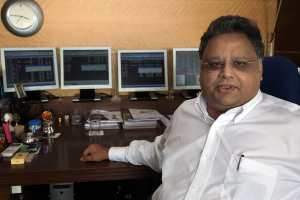
When I am ushered into his office, his bulky frame is propped up in front of three screens of flickering red and green stock prices. His eyes do not leave the constantly updating quotes for more than 15 seconds at any point in the interview. It seems that I am lucky to get even half of his attention.
I ask him what has prompted his new phase of bullishness. “Markets are dynamic, they’re constantly changing,” he says as he watches those markets morph on screen. “They’ve got reversed now. I think that, when at last confidence comes back, a lot of other things will come back.”
In 2005, when the Sensex had tipped above 5,000, Mr Jhunjhunwala declared it could hit 25,000 within five to six years. That brash prediction, not to mention his larger-than-life persona, helped him become a fixture on India’s financial news networks. And he came close to seeing what some considered a ridiculously bullish forecast come true. At the end of the bull run in January last year, the Sensex had passed 21,000.
Since the market crash, the 31 publicly traded stocks of which Mr Jhunjhunwala holds more than a 1 per cent stake lost about 60 per cent of their combined value, even underperforming the Sensex.
I ask him if he ever doubted his judgements on the India story. “Well, I examined my thoughts again,” he concedes. “But I could never lose my conviction about India’s growth. I held on to my stocks, very much so.”
Doing so has resulted in him losing much of the paper wealth that propelled him into the Forbes Rich List last year. “I have much less than what most people think, but much more than I need,” he tells me.
Mr Jhunjhunwala is frequently dubbed “India’s Warren Buffett”, but in many ways the two could not be more different. The Oracle of Omaha is a teetotaller and a non-smoker. Mr Jhunjhunwala constantly alternates between his preferred 555 cigarettes, sweet chewing paan and Indian snacks. He is known for his taste for cigars and Blue Label whisky.
While Mr Buffett still lives in the same house in Omaha he had when he began, Mr Jhunjhunwala has moved his family into a plush flat in Mumbai’s upmarket Malabar Hill neighbourhood. The only time he breaks away from his trading screens is when he shows me a slide show of his mountain-top mansion in the Mumbai hill station of Lonavla, one designed by the Indian architect Nitin Killawala.
Like Mr Buffett, however, Mr Jhunjhunwala is primarily a value investor and both are willing to share their investments and the rationale behind them with the public.
When Mr Jhunjhunwala invests, it is generally in unloved small and mid-cap stocks, such as Geometric, Zen Technologies and Aptech in the software sector, consumer goods companies such as Agrotech Foods and Titan watches, and service companies such as Tops Securities and a school management firm. None is really a household name.
“Rakesh is a classic bottom-up stock-picker, who gets into companies with strong managements and/or compelling long-term stories and then holds them through market cycles,” says Shankar Sharma, the managing director of First Global, who has been seen as the bear to Mr Jhunjhunwala’s bull. “I can’t see too many flaws in his make-up as a long-term investor.”
Mr Jhunjhunwala says his fascination with balance sheets began young. “I had a childhood love for stocks,” he says. “My father used to invest a bit and I used to talk about it with him in the evening. I was a very curious child, so I was always quizzing my dad. He said, ‘Instead of quizzing me all the time, why don’t you find out yourself’?”
This enchantment with profit-and-loss figures continued into his studies as a chartered accountant at Mumbai’s main business school, Sydenham College. He always knew he wanted to be in the market, although it was a business frowned upon by his family.
His father was a bureaucrat, a commissioner in India’s income tax department. The Jhunjhunwalas are from Rajasthan’s Marwari business community, traders in goods rather than on the Bombay Stock Exchange, which at the time was dominated by Gujaratis. “I initially wanted to become a broker, but I didn’t have the capital to be a broker, so I started investing,” Mr Jhunjhunwala says.
He entered the market in 1984, aged 25, with a 5,000-rupee investment (equivalent to about Dh1,000 today) in the iron-ore exporter Sesa Goa. Just three years later, he had turned that into 10 million rupees.
A quarter of a century later, Mr Jhunjhunwala has an office in Nariman Point, India’s financial district, where the walls bear line drawings of Mr Buffett, George Soros, John Templeton, Peter Lynch and other legendary investors, each accompanied by a few of their pithiest quotes written out in italic script. There is also a prayer room occupied by Ganesh, Lakshmi and other Hindu deities. “We pray that this room remains the best used part of our property for our future prosperity,” a sign reads.
Each of them, from Lynch to Lakshmi, have made him the businessman he is today, Mr Jhunjhunwala says. “Markets are my life, they’re my passion.” He does take time off, but not without his BlackBerry. However, he protests that looking at his BlackBerry is the second thing he does every day. The first is kissing his daughter.
Before his partner Utpal Sheth joined in 2004, Mr Jhunjhunwala was a one-man army, operating out of tiny offices in the warren-like streets around Dalal Street, Mumbai’s historic stock market district.
“We’ve gone from being ‘the wild east’ to one of the world’s most developed markets,” he says. “It’s more organised, more regulated. As the size and the breadth of the market increases, it will be more difficult to manipulate.”
Since the dark days of March, India’s Sensex has rallied almost 50 per cent, its biggest quarterly gain in 17 years. It is starting to look as if Mr Jhunjhunwala’s prediction of a long bull run may have been right, albeit one interrupted by a global financial crisis he could never have predicted.
Asked to list his reasons to be positive on India, Mr Jhunjhunwala veers into delphic, almost poetic language: “That India is a tortoise, slow but sure; that the forces that are driving India are irreversible; that in India everything is bottom up, not top down; and that India is biological.”
Asked what he means by “biological”, he says: “What is India? India is organised chaos, and therefore growth has never come through order, always through chaos. What’s driven India’s growth is the democracy, its demographic advantage and the tolerant nature of the Indian people.”
Checkout: Rakesh Jhunjhunwala's latest portfolio
Read More About Rakesh Jhunjhunwala
On the day I meet him, Rakesh Jhunjhunwala is front-page news. He has just told ET Now, a new financial news channel, that he thinks India’s Sensex index will touch the 19,000-point mark before the end of this year. That would be a 30 per cent rise from today’s prices, even during global economic turmoil, and it has won him the top spot on both the channel and the website of the Economic Times, its sister paper.
 This is exactly the kind of call that made Mr Jhunjhunwala the star of India’s bull run between 2003 and last year’s market crash, and the most sought-after commentator on India’s budget unveiled last week. He was one of the few businessmen willing to publicly criticise a budget many felt would be bad for investors.
When I am ushered into his office, his bulky frame is propped up in front of three screens of flickering red and green stock prices. His eyes do not leave the constantly updating quotes for more than 15 seconds at any point in the interview. It seems that I am lucky to get even half of his attention.
I ask him what has prompted his new phase of bullishness. “Markets are dynamic, they’re constantly changing,” he says as he watches those markets morph on screen. “They’ve got reversed now. I think that, when at last confidence comes back, a lot of other things will come back.”
In 2005, when the Sensex had tipped above 5,000, Mr Jhunjhunwala declared it could hit 25,000 within five to six years. That brash prediction, not to mention his larger-than-life persona, helped him become a fixture on India’s financial news networks. And he came close to seeing what some considered a ridiculously bullish forecast come true. At the end of the bull run in January last year, the Sensex had passed 21,000.
Since the market crash, the 31 publicly traded stocks of which Mr Jhunjhunwala holds more than a 1 per cent stake lost about 60 per cent of their combined value, even underperforming the Sensex.
I ask him if he ever doubted his judgements on the India story. “Well, I examined my thoughts again,” he concedes. “But I could never lose my conviction about India’s growth. I held on to my stocks, very much so.”
Doing so has resulted in him losing much of the paper wealth that propelled him into the Forbes Rich List last year. “I have much less than what most people think, but much more than I need,” he tells me.
Mr Jhunjhunwala is frequently dubbed “India’s Warren Buffett”, but in many ways the two could not be more different. The Oracle of Omaha is a teetotaller and a non-smoker. Mr Jhunjhunwala constantly alternates between his preferred 555 cigarettes, sweet chewing paan and Indian snacks. He is known for his taste for cigars and Blue Label whisky.
While Mr Buffett still lives in the same house in Omaha he had when he began, Mr Jhunjhunwala has moved his family into a plush flat in Mumbai’s upmarket Malabar Hill neighbourhood. The only time he breaks away from his trading screens is when he shows me a slide show of his mountain-top mansion in the Mumbai hill station of Lonavla, one designed by the Indian architect Nitin Killawala.
Like Mr Buffett, however, Mr Jhunjhunwala is primarily a value investor and both are willing to share their investments and the rationale behind them with the public.
When Mr Jhunjhunwala invests, it is generally in unloved small and mid-cap stocks, such as Geometric, Zen Technologies and Aptech in the software sector, consumer goods companies such as Agrotech Foods and Titan watches, and service companies such as Tops Securities and a school management firm. None is really a household name.
“Rakesh is a classic bottom-up stock-picker, who gets into companies with strong managements and/or compelling long-term stories and then holds them through market cycles,” says Shankar Sharma, the managing director of First Global, who has been seen as the bear to Mr Jhunjhunwala’s bull. “I can’t see too many flaws in his make-up as a long-term investor.”
Mr Jhunjhunwala says his fascination with balance sheets began young. “I had a childhood love for stocks,” he says. “My father used to invest a bit and I used to talk about it with him in the evening. I was a very curious child, so I was always quizzing my dad. He said, ‘Instead of quizzing me all the time, why don’t you find out yourself’?”
This enchantment with profit-and-loss figures continued into his studies as a chartered accountant at Mumbai’s main business school, Sydenham College. He always knew he wanted to be in the market, although it was a business frowned upon by his family.
His father was a bureaucrat, a commissioner in India’s income tax department. The Jhunjhunwalas are from Rajasthan’s Marwari business community, traders in goods rather than on the Bombay Stock Exchange, which at the time was dominated by Gujaratis. “I initially wanted to become a broker, but I didn’t have the capital to be a broker, so I started investing,” Mr Jhunjhunwala says.
He entered the market in 1984, aged 25, with a 5,000-rupee investment (equivalent to about Dh1,000 today) in the iron-ore exporter Sesa Goa. Just three years later, he had turned that into 10 million rupees.
A quarter of a century later, Mr Jhunjhunwala has an office in Nariman Point, India’s financial district, where the walls bear line drawings of Mr Buffett, George Soros, John Templeton, Peter Lynch and other legendary investors, each accompanied by a few of their pithiest quotes written out in italic script. There is also a prayer room occupied by Ganesh, Lakshmi and other Hindu deities. “We pray that this room remains the best used part of our property for our future prosperity,” a sign reads.
Each of them, from Lynch to Lakshmi, have made him the businessman he is today, Mr Jhunjhunwala says. “Markets are my life, they’re my passion.” He does take time off, but not without his BlackBerry. However, he protests that looking at his BlackBerry is the second thing he does every day. The first is kissing his daughter.
Before his partner Utpal Sheth joined in 2004, Mr Jhunjhunwala was a one-man army, operating out of tiny offices in the warren-like streets around Dalal Street, Mumbai’s historic stock market district.
“We’ve gone from being ‘the wild east’ to one of the world’s most developed markets,” he says. “It’s more organised, more regulated. As the size and the breadth of the market increases, it will be more difficult to manipulate.”
Since the dark days of March, India’s Sensex has rallied almost 50 per cent, its biggest quarterly gain in 17 years. It is starting to look as if Mr Jhunjhunwala’s prediction of a long bull run may have been right, albeit one interrupted by a global financial crisis he could never have predicted.
Asked to list his reasons to be positive on India, Mr Jhunjhunwala veers into delphic, almost poetic language: “That India is a tortoise, slow but sure; that the forces that are driving India are irreversible; that in India everything is bottom up, not top down; and that India is biological.”
Asked what he means by “biological”, he says: “What is India? India is organised chaos, and therefore growth has never come through order, always through chaos. What’s driven India’s growth is the democracy, its demographic advantage and the tolerant nature of the Indian people.”
Checkout: Rakesh Jhunjhunwala's latest portfolio
Read More About Rakesh Jhunjhunwala
Subscribe to:
Posts (Atom)